
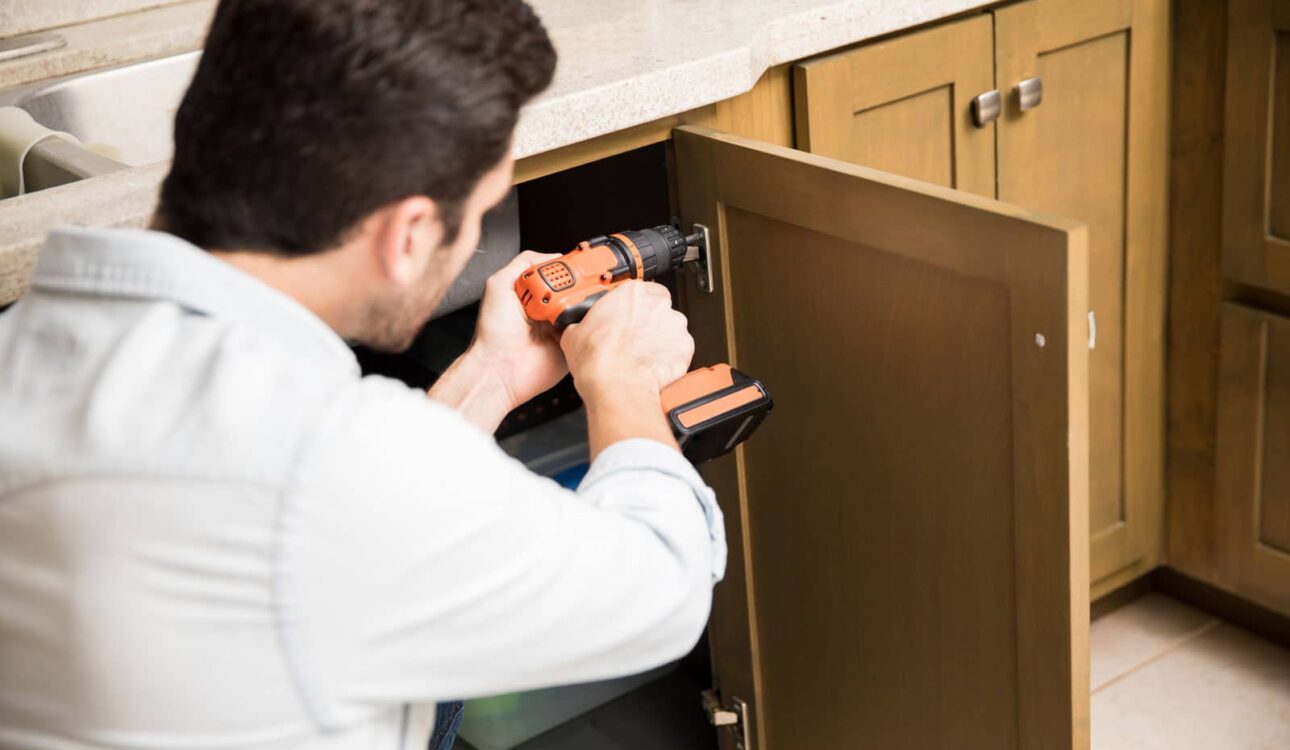
If your kitchen cabinets are structurally sound but look tired, you have probably landed on the same question that comes up in almost every consultation we run, from Costa Mesa to Irvine to Huntington Beach: should you reface them or paint them? The kitchen cabinet refacing vs painting decision looks simple on the surface. Both options skip the cost and mess of a full tear-out, both refresh the room, and both cost far less than new custom cabinetry. But they solve different problems, and choosing the wrong one is how homeowners end up with chipped finishes six months later, or a “new” kitchen that still looks like it did in 1995.
At Q Kitchen & Bath, we’re a design-build remodeling firm based in Costa Mesa, and we don’t have a reason to push you toward one option. Some kitchens are perfect painting candidates. Others clearly need refacing. And some, honestly, need neither. This guide walks through cost, durability, design flexibility, timeline, and the Orange County–specific factors that most online articles skip, so you can make the kitchen cabinet refacing vs painting call with clear eyes.
The Quick Answer: Kitchen Cabinet Refacing vs Painting at a Glance
If you only have a minute, here’s the short version:
- Choose painting if you like your current door style, your doors are solid wood or MDF in good condition, and your main goal is a color change on the most budget-friendly path.
- Choose refacing if you want a different door style (for example, swapping raised-panel doors for clean Shaker or slab fronts), your doors are damaged or dated, or you want a factory-grade finish without replacing the cabinet boxes.
- Choose replacement if the cabinet boxes are water-damaged or sagging, or the layout simply doesn’t work for how you cook.
| Factor | Cabinet Painting | Cabinet Refacing |
| Relative cost | Lowest | Moderate |
| Can change door style | No | Yes |
| Finish | Sprayed or brushed paint over existing surfaces | Factory-finished doors plus veneer or laminate skins |
| Disruption | Short; kitchen partially usable | Short on-site work after a fabrication lead time |
| Best for | Good doors that need a new color | Dated or damaged doors on sound boxes |
| Main weak spot | Chips on high-touch edges | Heat damage to some thermofoil finishes |
That table covers the headline differences in the kitchen cabinet refacing vs painting debate. The details below are where the right answer for your home actually lives.
What Is Cabinet Refacing?
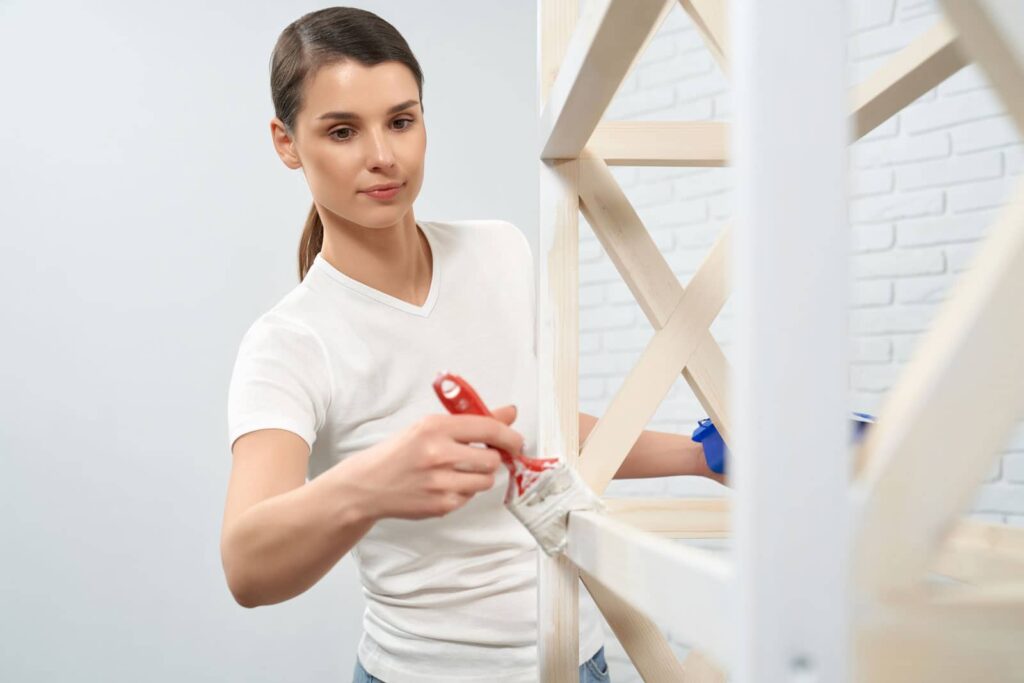
Cabinet refacing keeps your existing cabinet boxes, the structural frames that hold everything up, and replaces or covers everything you actually see. Think of it as a new outfit on the same skeleton. If the bones of your kitchen are good, refacing lets you change its personality without demolition. Understanding exactly what that involves is the first step in any kitchen cabinet refacing vs painting comparison.
What’s Included in a Kitchen Cabinet Refacing Project
A complete refacing job usually includes:
- New doors and drawer fronts in the style, material, and finish you choose
- Veneer or laminate skins applied to exposed face frames and end panels so the boxes match the new doors
- New hinges, often an upgrade to concealed soft-close hinges
- New hardware such as pulls and knobs
- Optional upgrades like new drawer boxes with full-extension soft-close slides, crown molding, light rail, pull-out organizers, or a few added or modified cabinets
Because the boxes stay in place, your countertops, backsplash, and plumbing usually stay untouched. That’s a big reason refacing appeals to homeowners who installed quartz or natural stone counters in the last few years and don’t want to risk them during a cabinet makeover.
Refacing Materials: Wood Veneer, Thermofoil, and Laminate
The material you choose matters as much as the decision to reface in the first place:
- Real wood veneer: Thin sheets of real wood that can be stained or painted. It has a natural look and, unlike most alternatives, can be refinished later.
- Rigid thermofoil (RTF): A vinyl film heat-pressed over MDF. It’s smooth, uniform, and easy to wipe clean, but it can soften or peel near high heat sources like ovens and self-cleaning ranges if heat shields aren’t installed.
- Laminate (high-pressure or thermally fused): Very durable, moisture-resistant, and a popular choice for modern flat-panel and European-style kitchens.
When clients compare kitchen cabinet refacing vs painting, material choice is often the deciding factor. A wood-veneer reface in white oak delivers something paint never can: real wood grain on a door style you actually chose.
What Is Professional Kitchen Cabinet Painting?
Cabinet painting keeps your doors, drawer fronts, and boxes exactly as they are and changes their color and sheen with new coatings. Done properly, it’s far more involved than rolling on a few coats over a weekend, and the gap between a professional finish and a typical DIY job is wider than most people expect. Painting is the lower-cost half of the kitchen cabinet refacing vs painting equation, but only when the prep is done right.
Why Prep Is Most of the Job
A durable painted finish depends almost entirely on what happens before any color goes on:
- Removing doors, drawers, and hardware, and labeling every piece
- Deep degreasing, since kitchen cabinets carry years of cooking residue that paint won’t stick to
- Repairing dings and filling old hardware holes if pulls are changing
- Sanding or deglossing so the primer has something to grip
- Applying a bonding primer suited to the existing surface
- Grain filling, if you’re painting oak and want a smooth, modern look
That last step deserves an honest note. Oak has deep, open grain, and paint alone won’t hide it. Paint oak cabinets without grain filling and the texture will show through the finish. Some homeowners like that look. Most people who want a sleek white or greige kitchen don’t, so it’s worth asking any painter how they handle it.
Brush, Roll, or Spray? How the Method Changes Your Finish
- Brushed and rolled finishes cost the least, but they show brush marks and roller texture, especially in satin and semi-gloss sheens.
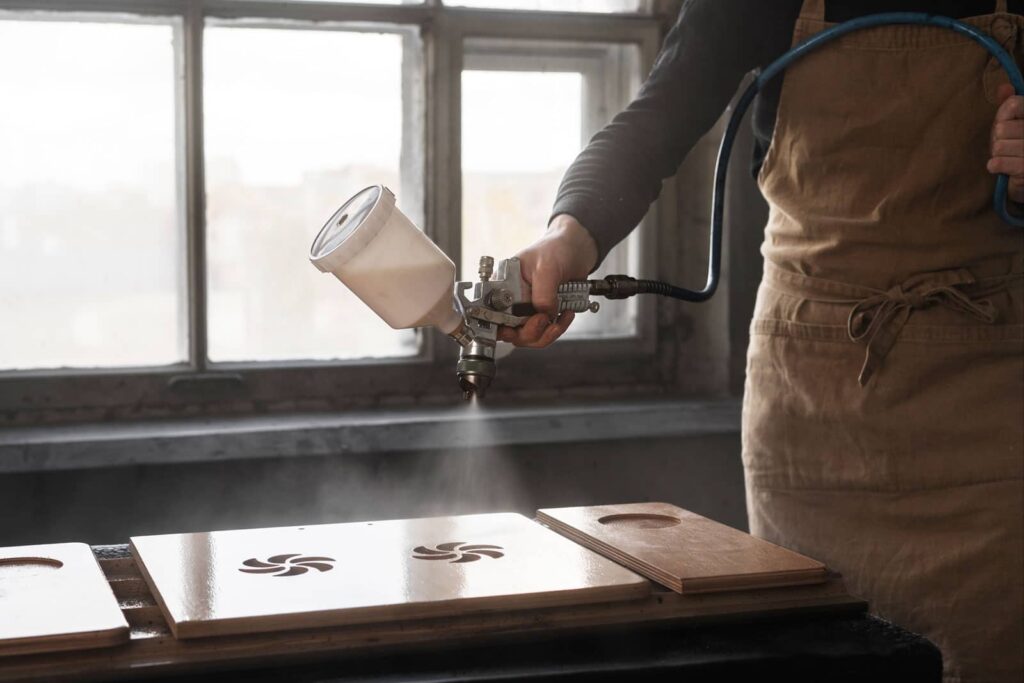
- Sprayed finishes, with doors sprayed off-site and boxes sprayed in place after careful masking, give the smoothest, most factory-like result.
For most painted-cabinet projects, a sprayed cabinet-grade enamel is the standard we’d recommend.
Durability: Do Painted or Refaced Cabinets Last Longer?
Durability is where the kitchen cabinet refacing vs painting comparison gets real, because it’s the part homeowners feel every day.
Where Painted Cabinets Wear First
Even a professional paint job has predictable weak spots:
- Door edges and corners near the sink, trash pull-out, and lower drawers, where hands, shoes, and pots make contact
- The sink base and dishwasher sides, where moisture and steam are constant
- Hairline cracks at the joints of five-piece doors, as solid wood expands and contracts seasonally. This is normal wood movement, not a defect, but it’s worth knowing before you choose paint.
The good news: painted cabinets are easy to touch up. Ask your contractor to leave labeled leftover paint for future repairs.
How Refaced Cabinets Age
New doors for refacing are typically finished in a factory or shop under controlled conditions, so the finish generally cures harder and more evenly than paint applied in a home. Wood veneer can be refinished down the road, and quality laminate stands up well to daily wear. The main caution is thermofoil near heat, which is why we look at your appliance layout before recommending it.
Bottom line: in the kitchen cabinet refacing vs painting durability matchup, a well-executed reface usually outlasts a paint job in a busy family kitchen. But a properly prepped, sprayed paint finish holds up for years with reasonable care, and painted cabinet durability depends far more on prep quality than on the paint brand.
Design Flexibility: How Much Can Each Option Change Your Kitchen?
Here is where the kitchen cabinet refacing vs painting comparison tilts most sharply. Painting changes color. Refacing changes character.
- Painting keeps your existing door profile. If you have arched, raised-panel “cathedral” doors, painting them white gives you white cathedral doors, not a modern kitchen.
- Refacing lets you switch to Shaker cabinet doors, flat slab fronts, or a different wood species entirely, and it opens up two-tone designs with, say, painted uppers and wood-veneer lowers.
- Both options allow new hardware, which is one of the cheapest ways to modernize a kitchen.
- Neither option truly changes your layout. Refacing can add a few cabinets, an end panel, or an appliance garage, but it won’t relocate your sink or move an island.
If your frustration is the color, paint can solve it. If your frustration is the style, paint can’t, and that’s the single most common mistake we see when homeowners decide whether to reface or paint kitchen cabinets.
Timeline and Disruption: Living Through a Cabinet Makeover
Neither option requires moving out, but day to day, the kitchen cabinet refacing vs painting experience is different:
- Painting happens almost entirely in one continuous stretch. Doors are usually removed and finished off-site while the boxes are masked and sprayed in place, and your kitchen stays partly usable. Modern waterborne enamels feel dry quickly but, according to most manufacturers’ data sheets, take weeks to reach full hardness, so you’ll want to be gentle with doors at first.
- Refacing starts with measuring and a fabrication period while your new doors are built. The on-site work that follows is usually short, and your kitchen stays usable for most of it.
Orange County Factors Most Cabinet Guides Ignore
National articles on cabinet painting vs refacing rarely account for local conditions. In Orange County, three factors deserve real attention.
Lead Paint in Pre-1978 Orange County Homes
A large share of homes in Santa Ana, Costa Mesa, Anaheim, Fullerton, and older Newport Beach neighborhoods were built before 1978. If your cabinets still carry original paint, sanding them can create hazardous lead dust. Under the EPA’s Lead Renovation, Repair and Painting (RRP) Program, paid renovation, repair, and painting work that disturbs lead-based paint in pre-1978 homes must be performed by lead-safe certified firms.
This applies to both sides of the kitchen cabinet refacing vs painting choice: sanding old finishes for paint and removing or trimming painted parts during a reface can both disturb lead paint. If your home is older, ask for testing and confirm the contractor’s RRP certification before work begins.
Southern California’s Strict Rules on Paint VOCs
Orange County falls within the South Coast Air Quality Management District, whose Rule 1113 on architectural coatings limits the volatile organic compound (VOC) content of paints used in the region. In practical terms, the low-VOC cabinet paint used in your home has to meet some of the strictest standards in the country.
That’s good news for indoor air quality, but it also means today’s compliant waterborne and hybrid enamels are less forgiving of shortcuts in prep, temperature, and cure time than the oil-based paints many painters relied on decades ago. Ask any painter exactly which product they’ll use and how they prep for it.
Coastal Humidity, Heat, and Sun
In coastal communities like Newport Beach, Huntington Beach, and Laguna Beach, higher humidity can slow paint curing, which makes ventilation and scheduling more important. Inland, strong afternoon sun through west-facing windows can fade some finishes over time and add heat stress to thermofoil. A good remodeler factors your home’s exposure into the material recommendation.
When Neither Refacing nor Painting Is the Right Call
Sometimes the honest answer to the kitchen cabinet refacing vs painting question is “neither.” Both options depend on healthy cabinet boxes, and we’ll tell you if yours aren’t. Consider full replacement or a larger kitchen remodel if:
- The sink base shows water damage or swollen particleboard
- Shelves sag, or boxes are separating at the joints
- Your layout doesn’t work: not enough storage, a poor work triangle, or a cramped walkway
- You plan to move walls, relocate plumbing, or add an island within the next few years
- The boxes are low-grade particleboard in poor condition
Putting new doors or fresh paint on failing boxes just delays a bigger bill. If you’re leaning that direction, our kitchen remodeling services in Orange County cover full design-build projects from layout to finish.
How to Decide: A Practical Checklist for Homeowners
Run through these questions before you collect kitchen cabinet refacing vs painting quotes:
- Are the cabinet boxes solid and dry? If not, stop here and consider replacement.
- Do you like your current door style? Yes points to painting. No points to refacing.
- What are your doors made of? Solid wood and MDF paint well. Thermofoil and laminate generally don’t, which pushes you toward refacing.
- Is your kitchen oak? Budget for grain filling if you want a smooth painted look.
- How hard is your kitchen used? Heavy daily use with kids favors refacing’s factory finish.
- How long will you stay? If you’re selling soon, a clean professional paint job can be a smart, cost-effective refresh.
- Was your home built before 1978? Plan for lead testing and an RRP-certified contractor either way.
If most of your answers point one direction, you have your answer. If they’re split, an in-home assessment is usually the fastest way to settle the kitchen cabinet refacing vs painting question.
How to Choose a Contractor for Cabinet Refacing or Painting
Whichever side of the kitchen cabinet refacing vs painting decision you land on, the contractor matters more than the method. Before you sign anything:
- Verify the license. In California, home improvement work totaling $500 or more in labor and materials requires a contractor licensed by the state. You can check any license on the Contractors State License Board (CSLB) website.
- Get multiple written bids and a detailed written contract that lists materials, products, and scope.
- Confirm lead-safe certification for any pre-1978 home.
- Ask for a sample door in your chosen finish or veneer before committing.
- Ask about warranties on finishes, doors, and workmanship.
- Look at real photos of their completed projects, not stock images.
Our Honest Take at Q Kitchen & Bath
After years of designing and building kitchens across Orange County, our view on kitchen cabinet refacing vs painting is simple: the best choice is the one that solves your actual problem. If you love your layout and door style and just want a new color, professional painting is a smart, efficient investment. If your doors are dated, damaged, or simply not you, refacing delivers a transformation that paint can’t match. And if your boxes or layout are failing, we’ll say so plainly, even when that means recommending a bigger project than you came in for.
Still weighing kitchen cabinet refacing vs painting for your home? Our team can look at your cabinets in person, check the boxes, and give you a straight recommendation with clear pricing. Call (909) 552-9090, email info@q-kb.com, or visit our showroom at 3135 Harbor Blvd, Suite C, Costa Mesa, CA 92626.
Frequently Asked Questions About Kitchen Cabinet Refacing vs Painting
Is it cheaper to reface or paint kitchen cabinets?
Painting is almost always cheaper. It keeps your existing doors and boxes and only changes the finish, while refacing adds new doors, drawer fronts, veneer skins, and hardware. In most kitchen cabinet refacing vs painting comparisons, refacing costs more upfront but delivers a bigger visual change and often a longer-lasting finish.
Which lasts longer, painted or refaced cabinets?
Refaced cabinets usually last longer because new doors arrive with factory-cured finishes that resist chipping better than paint applied on-site. A professionally prepped, sprayed paint job can still look great for years, but high-touch edges near the sink and trash pull-out will typically need touch-ups sooner.
Can I keep my countertops if I reface or paint my cabinets?
Yes. Both options keep your existing cabinet boxes, so countertops, backsplash, and plumbing normally stay in place. This is one of the biggest advantages of either approach over full replacement, especially if you recently installed quartz or stone.
Can you paint thermofoil or laminate cabinets?
It’s possible with specialty bonding primers, but we rarely recommend it. Paint struggles to grip slick vinyl and laminate surfaces, and peeling thermofoil can’t be fixed with paint. For thermofoil or laminate doors, refacing is usually the more reliable and longer-lasting solution.
How do I know if my cabinets are good candidates for refacing or painting?
Your cabinets are good candidates if the boxes are solid, dry, and free of sagging or water damage, and the layout works for you. If the sink base is swollen, shelves sag, or you want to change the layout, replacement or a full remodel is the better investment. An in-home assessment is the quickest way to know for sure.