
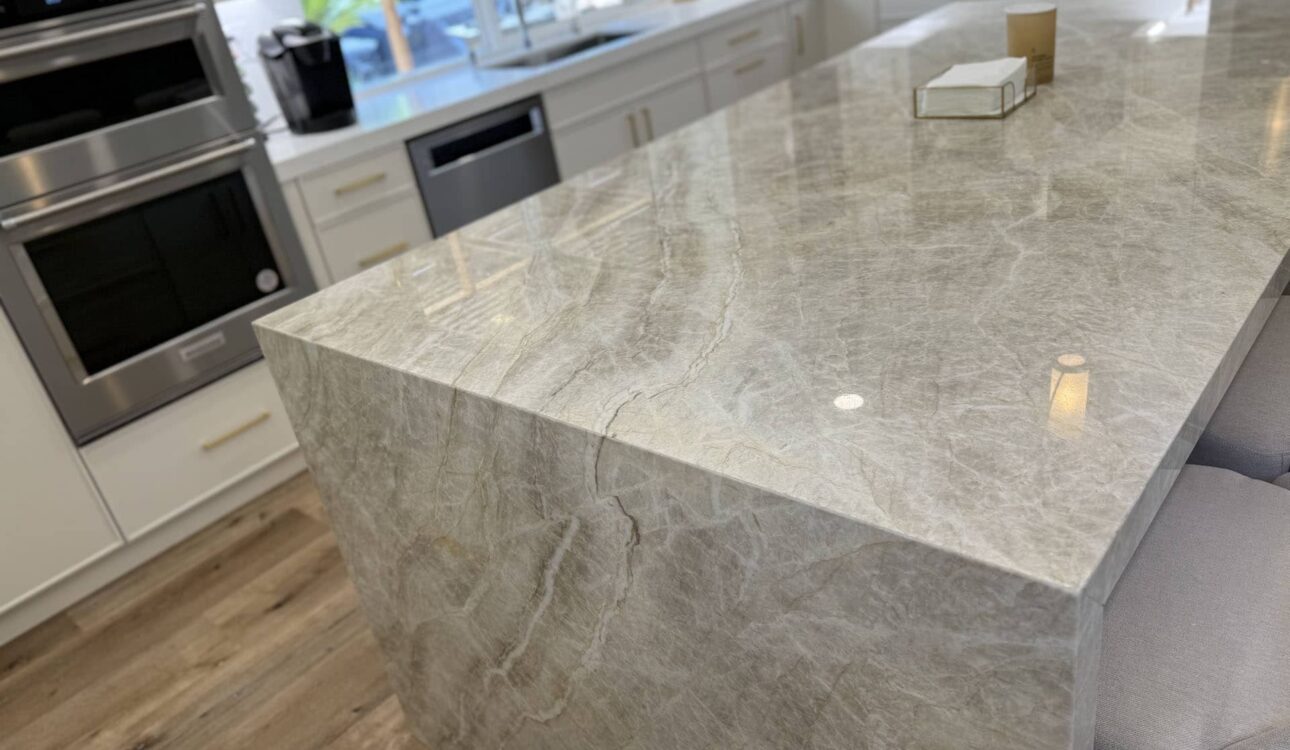
For years, the granite vs quartz countertops debate came down to personal taste. Do you want the one-of-a-kind movement of natural stone, or the clean, consistent look of an engineered surface? Both materials are durable, both look sharp in a modern kitchen, and both add real value to a Southern California home.
In 2026, the conversation got more complicated. California regulators are moving to restrict the fabrication of high-silica engineered stone—the material most people simply call “quartz”—after a surge of serious lung disease among the workers who cut and polish it. If you’re planning a kitchen or bathroom remodel in Orange County, that affects your material options, your timeline, and the questions you should ask any fabricator.
At Q Kitchen & Bath, we design and build kitchens and bathrooms across Southern California, and countertops are one of the first big decisions our clients wrestle with. This guide breaks down granite vs quartz countertops on the factors that actually matter day to day—durability, maintenance, cost drivers, and design—then explains exactly what California’s engineered stone rules say today, what is still only proposed, and how to make a confident, informed choice for your home.
Key takeaways
- Granite is natural, heat-tolerant, and UV-stable, but it needs periodic sealing.
- Quartz is non-porous and low-maintenance, but its resin binder is vulnerable to high heat and long-term sun exposure.
- California already requires wet cutting, worker training, and strict dust controls for stone fabrication. A proposed rule would go further and prohibit fabricating engineered stone above 1% crystalline silica.
- An installed quartz countertop in your home is not what regulators are targeting—the hazard is dust created when slabs are cut, ground, and polished.
- Low-silica engineered surfaces, porcelain slabs, and natural stone are all viable paths forward.
Granite vs Quartz Countertops: The Quick Answer for California Homeowners
If you want the short version: granite is the better fit for serious cooks, outdoor kitchens, and homeowners who love natural variation and don’t mind sealing once in a while. Quartz has historically been the go-to for busy households that want a uniform look and near-zero upkeep.
What’s changed is availability and sourcing. Because California’s rules target high-silica engineered stone specifically, comparing granite vs quartz countertops now also means asking what your engineered surface is made of, where it will be cut, and whether that shop is compliant. In other words, the granite vs quartz countertops question used to be “which do I like better?” Today it’s “which do I like better, and can it be fabricated safely and on schedule in California?”
We’ll unpack every piece of the quartz vs granite countertops question below, starting with the materials themselves.
What’s the Difference Between Granite and Quartz Countertops?
Before weighing pros and cons, it helps to understand what you’re actually buying. The core difference in granite vs quartz countertops is origin: one is mined, the other is manufactured.
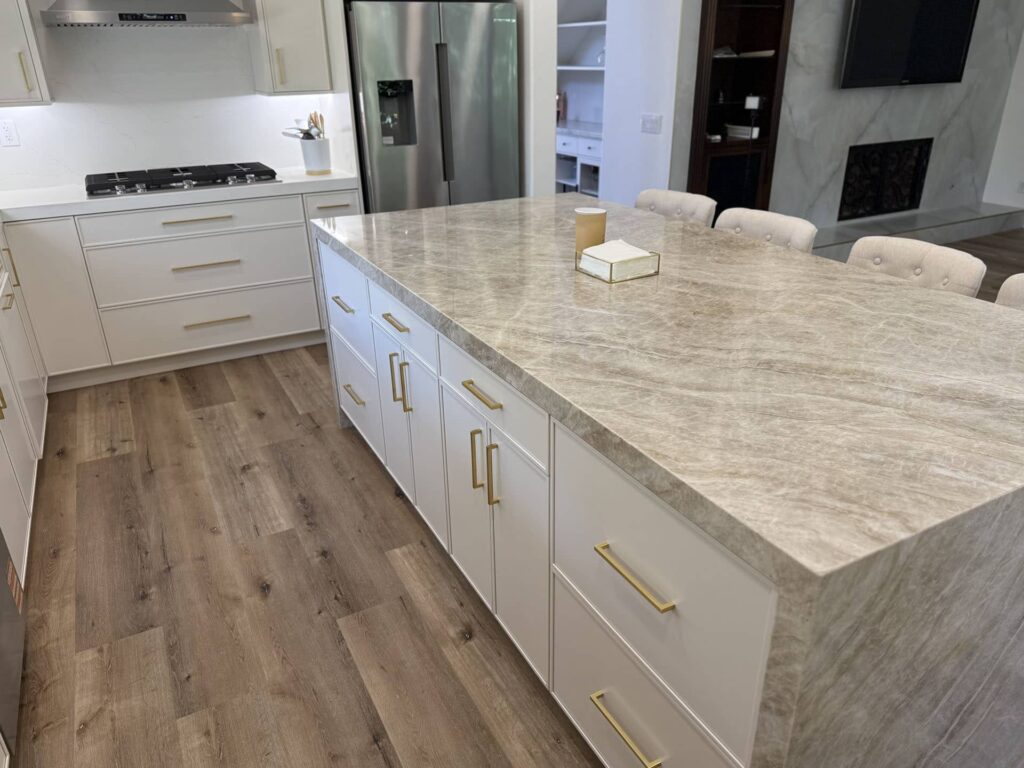
Granite: Natural Stone Cut From the Earth
Granite is an igneous rock formed from magma that cooled slowly deep underground. It’s quarried in massive blocks, sliced into slabs, polished, and shipped to fabricators. Its mineral makeup—feldspar, quartz, mica, and others—creates the flecks, veins, and color shifts that make every slab unique. Two slabs with the same trade name, even from the same quarry, can look noticeably different.
That uniqueness is exactly the point for many homeowners. When you choose granite, you typically visit a stone yard and hand-select the slabs that will become your countertops. No one else will have the same kitchen.
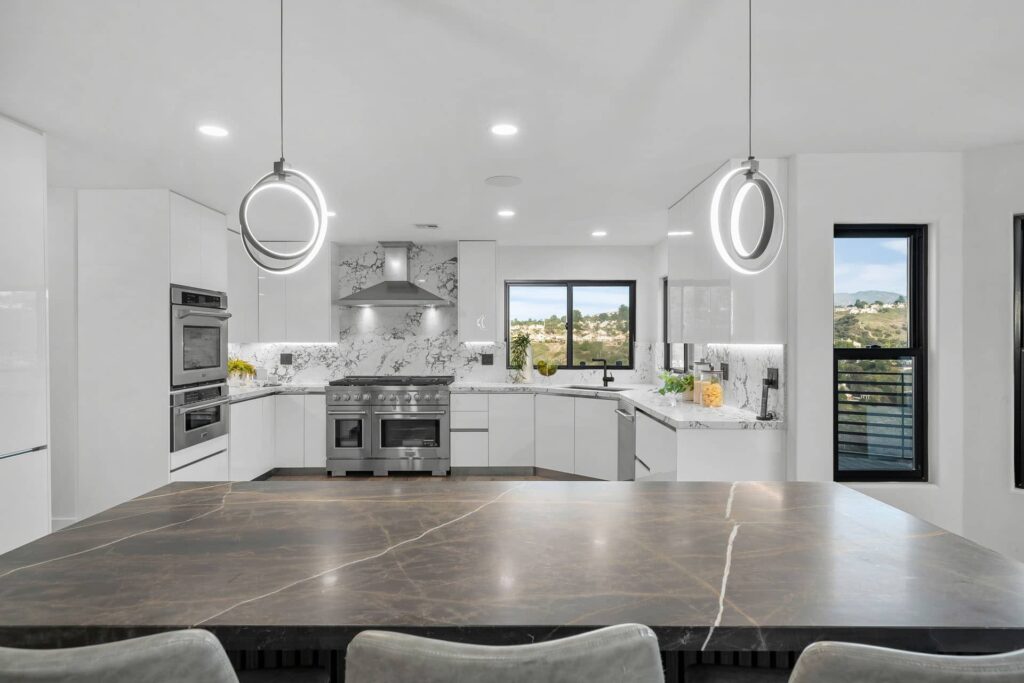
Quartz: Engineered Stone Made in a Factory
“Quartz” countertops are engineered stone: crushed quartz and other minerals bound together with polymer resins and pigments, then pressed and cured into slabs. Traditional formulations are overwhelmingly silica—often above 90% crystalline silica, compared with substantially lower levels in most granites.
The factory process gives engineered stone its biggest selling points: consistent color, predictable patterning, and a non-porous surface. It’s also why the material is now under regulatory scrutiny in California.
A quick note on terms: quartzite is not the same thing as quartz. Quartzite is a natural metamorphic stone that’s often confused with engineered quartz in showrooms. Always ask whether a slab is natural or engineered—it matters for care, cost, and compliance.
Durability Showdown: Which Countertop Material Lasts Longer?
Granite and quartz countertops can both last for decades when they’re fabricated and installed properly. Where granite vs quartz countertops really differ is in how they fail—and which everyday habits put them at risk.
Scratch and Chip Resistance
In the granite vs quartz countertops matchup, both surfaces rank high on the Mohs hardness scale and shrug off normal kitchen contact. Neither should be used as a cutting board—you’ll dull your knives quickly on either one. Quartz has slight flexibility thanks to its resin, which helps it resist chipping along edges and corners. Granite can chip at corners or along natural fissures if it takes a hard hit from a cast-iron pan, but small chips are usually repairable with color-matched epoxy by an experienced fabricator.
Heat Resistance in a Real Kitchen
On heat, the granite vs quartz countertops comparison isn’t close: natural stone pulls clearly ahead. Granite forms under extreme heat, so a warm pan set down briefly is unlikely to harm it (trivets are still smart, especially near seams). Quartz behaves differently. Its resin binder can scorch, discolor, or crack from thermal shock when a hot pot or sheet pan goes straight onto the surface. With quartz, trivets and hot pads aren’t optional—they’re part of owning it.
Sun, UV, and Southern California Outdoor Kitchens
Here’s a granite vs quartz countertops factor that matters more in Orange County than almost anywhere else in the country. Many engineered stone manufacturers don’t recommend their products for outdoor use, because prolonged UV exposure can yellow or fade the resin. If you’re planning an outdoor kitchen in Irvine or a sunny patio bar in Newport Beach, granite or porcelain is generally the safer choice. Even indoors, a quartz counter beside a large west-facing window can develop uneven color over many years.
Granite vs quartz countertops: durability scorecard
- Everyday wear: roughly a tie
- Heat: granite wins
- UV and outdoor use: granite wins
- Edge chipping: slight edge to quartz
- Repairability: both can be repaired by a skilled fabricator
Countertop Maintenance: Sealing, Cleaning, and Stain Resistance
When homeowners compare granite vs quartz countertops, maintenance is often the tiebreaker. Here’s what living with each one really looks like.
How to Care for Granite Countertops
Granite is porous to varying degrees. Without a good sealer, cooking oil, red wine, and coffee can soak in and leave stains. The good news is that sealing granite is simple, inexpensive, and something most homeowners can do themselves in under an hour.
- Run the water test: place a few drops of water on the surface. If the stone darkens within several minutes, it’s time to reseal.
- Seal on a schedule: many slabs need resealing every one to three years; dense, dark granites may need it less often.
- Clean gently: use warm water with mild dish soap or a pH-neutral stone cleaner. Skip vinegar, bleach, and abrasive pads, which wear down sealers over time.
- Wipe spills promptly, especially oils and acidic liquids like citrus juice.
How to Care for Quartz Countertops
Quartz never needs sealing because it’s non-porous. That’s a genuine advantage in a busy family kitchen, a rental, or a kids’ bathroom.
- Daily cleaning: soap, warm water, and a soft cloth are all you need.
- Avoid harsh chemicals: strong solvents, oven cleaners, and high-pH products can damage the resin surface.
- Use trivets and cutting boards every single time.
- Watch permanent markers and dyes, which can still leave marks on lighter colors.
In short, the granite vs quartz countertops maintenance trade-off is simple: granite asks for a few minutes of attention each year, while quartz asks you to protect it from heat and harsh chemicals. Neither is high-maintenance compared with marble or butcher block.
Appearance and Design Flexibility: Natural Stone vs Engineered Quartz
Looks still drive most granite vs quartz countertops decisions, so it’s worth being specific. Granite offers depth and movement that no factory can fully replicate—speckled blacks, warm golds, dramatic veined whites. The trade-off is less predictability: matching seams on a long island takes skill, and your final slab may differ from a small showroom sample.
In the quartz vs granite countertops comparison, engineered quartz offers consistency. If you want a crisp, solid white or a soft concrete gray across an entire kitchen, quartz has long delivered that with fewer surprises. Honed and leathered finishes are available for both materials, and both pair well with the modern, sophisticated spaces our clients ask for. For a broader look at finishes that tie a space together, see our guides on [kitchen remodeling in Orange County] and [bathroom remodeling in Orange County].
California’s New Engineered Stone Rules, Explained
This is the part of the granite vs quartz countertops conversation that most comparison articles skip—or get wrong. Let’s separate what is already law from what is still proposed. Rules are changing quickly, so this section reflects the status as of October 31, 2026.
Why Regulators Are Focused on Crystalline Silica Dust
When stone is cut, ground, or polished, it releases respirable crystalline silica—microscopic dust that lodges deep in the lungs. Heavy exposure can cause silicosis, an incurable and sometimes fatal lung disease. Because traditional engineered stone is so high in silica, workers who fabricate it face especially severe exposures, and the disease can progress quickly.
The California Department of Public Health (CDPH) tracks engineered stone silicosis cases through a public surveillance dashboard. By May 2026, the state had confirmed more than 560 cases linked to engineered stone, including at least 31 deaths, and new cases continue to be reported. The people affected are overwhelmingly fabrication workers, many of them young.
What’s Already Law: Cal/OSHA’s Silica Standard and the STOP Act (SB 20)
California has tightened the rules in stages:
- December 2023: Cal/OSHA’s Standards Board adopted an emergency silica standard aimed at high-exposure tasks in stone fabrication.
- February 2025: That standard became permanent under Title 8, Section 5204. Cutting, grinding, and polishing artificial stone above 0.1% crystalline silica—and natural stone above 10%—are treated as high-exposure tasks that require enhanced controls.
- October 13, 2025: Governor Newsom signed SB 20, the Silicosis Training, Outreach, and Prevention (STOP) Act.
- January 1, 2026: The STOP Act took effect, banning dry cutting, requiring wet methods and worker training, and classifying silicosis as a serious injury that triggers a Cal/OSHA investigation.
- July 1, 2026: Annual electronic training attestations for fabricators began.
Notice that these rules apply to natural stone too, which matters for anyone weighing granite vs quartz countertops. Granite with more than 10% silica falls under the same high-exposure requirements, so any shop cutting your granite should be following them.
What’s Proposed: The 1% Crystalline Silica Prohibition
On May 21, 2026, the Occupational Safety and Health Standards Board voted unanimously to grant a petition from occupational medicine physicians and directed Cal/OSHA to begin emergency rulemaking. The goal: prohibit the fabrication and installation of artificial stone containing more than 1% crystalline silica. Cal/OSHA published a discussion draft in September and an updated draft on October 22, 2026, with public comments closing October 30.
Based on the published drafts, the proposal would:
- prohibit manufacturing and fabricating artificial stone above 1% crystalline silica in California workplaces, including on job sites;
- limit on-site work to minor adjustments that improve the fit of previously fabricated pieces;
- allow a wind-down period for material a shop already owns or has contracted to buy before adoption;
- require documentation that a product is below 1% silica—otherwise it’s treated as high-silica artificial stone.
Two caveats matter. First, as of this writing the Standards Board has not adopted a final rule, and the text may still change. Second, Cal/OSHA regulates workplaces, not retail sales, so the rule would restrict the work of cutting and installing high-silica slabs rather than banning the product from stores. You can follow the latest drafts directly on Cal/OSHA’s engineered stone rulemaking page.
Is Your Existing Quartz Countertop Safe?
This is the question we hear most when clients compare granite vs quartz countertops. The hazard regulators are addressing is airborne dust created during fabrication—cutting, grinding, and polishing. A finished, installed countertop used for normal cooking and cleaning isn’t the issue. Caution matters if you ever plan to cut, drill, or demolish an existing engineered stone top during a future remodel. That work should be handled by a compliant contractor using wet methods and proper dust control, never as a DIY job with a dry saw.
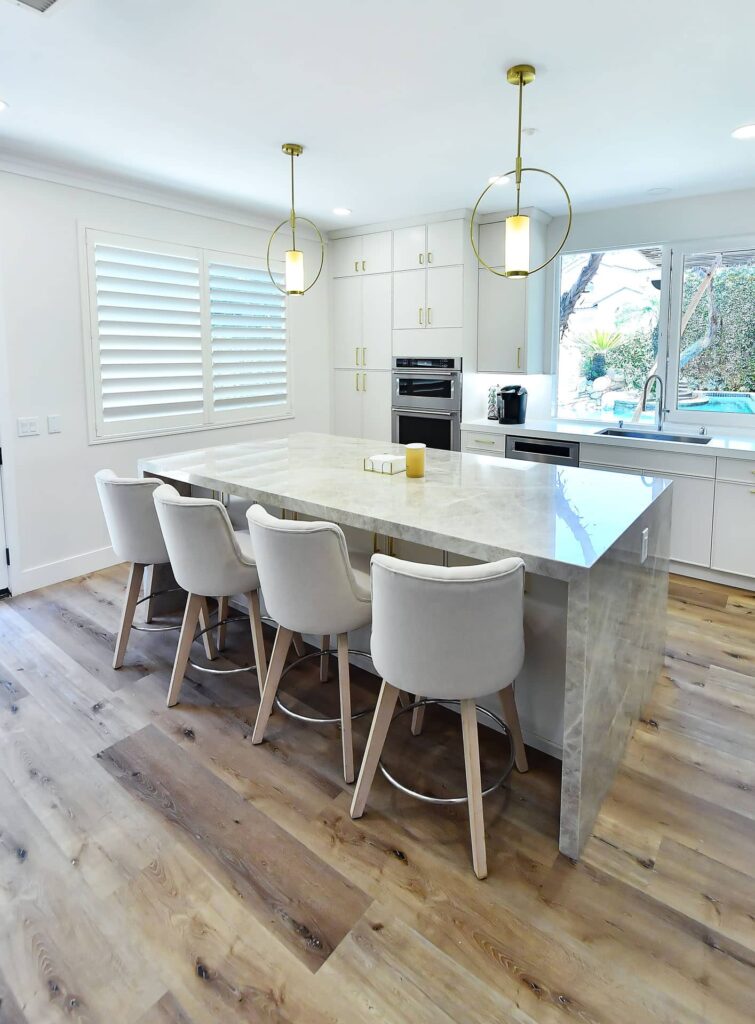
How the New Rules Change the Granite vs Quartz Countertops Decision
For homeowners, the practical takeaway isn’t panic—it’s planning. If the prohibition is adopted, high-silica engineered slabs may become harder to source and fabricate in California, project timelines could shift, and some popular colors may be reformulated or discontinued. That makes choosing granite vs quartz countertops a supply-chain decision as much as a design one.
It also shifts the risk calculation behind granite vs quartz countertops. A homeowner who picks a high-silica quartz color today could face a substitution later if the rule takes effect mid-project. Choosing granite, porcelain, or a documented low-silica surface removes that uncertainty.
Questions to Ask Your Fabricator Before You Sign
Whichever side of the granite vs quartz countertops debate you land on, ask these questions before you commit to any slab:
- Is this material natural or engineered? What’s its crystalline silica content, and can you share the manufacturer’s documentation?
- Is your shop compliant with Cal/OSHA’s silica standard and the STOP Act, including wet-cutting methods and current training attestations?
- Will any cutting happen at my home? If so, how will dust be controlled?
- If engineered stone rules change mid-project, what’s the backup plan for my material and schedule?
- Is the work being performed under a contractor licensed by the Contractors State License Board (CSLB)?
A reputable fabricator or design-build contractor will answer all five without hesitation.
Low-Silica Quartz and Other Countertop Alternatives
If neither side of the granite vs quartz countertops choice feels right, the market is already responding with materials that deliver the quartz look with far lower silica content:
- Low-silica or “silica-free” engineered surfaces: newer formulations that replace much of the crystalline silica with recycled glass, feldspar, or other minerals. Always verify the documented silica percentage.
- Porcelain and sintered stone slabs: fired at very high temperatures; thin, heat-resistant, UV-stable, and convincing in marble and concrete looks. The current drafts focus on artificial stone, and fired products are treated differently.
- Natural stone: granite, marble, soapstone, and quartzite remain legal to fabricate under existing controls. Note that quartzite is naturally very high in silica, so shop compliance matters just as much.
- Solid surface: acrylic-based, seamless, and repairable—a practical choice for bathroom vanities.
Cost and Resale Value of Granite vs Quartz Countertops in Orange County
We don’t publish generic price ranges, because countertop pricing in Orange County moves with slab grade, edge profiles, cutouts, backsplash height, and—right now—regulatory uncertainty. What we can tell you is what drives the number:
- Slab selection: exotic granites and premium designer quartz colors cost more than builder-grade options.
- Fabrication complexity: waterfall edges, mitered seams, and integrated sinks add labor.
- Square footage and seams: large islands may require oversized or jumbo slabs.
- Compliance: shops investing in wet-cutting systems, ventilation, and training carry real overhead—and that’s a cost worth paying.
On resale, granite vs quartz countertops is close to a draw—both read as premium to buyers in Costa Mesa, Irvine, and Newport Beach. Current design trends lean toward quieter, lighter surfaces—soft whites, warm greiges, and subtle veining—which you can achieve in honed granite, porcelain, or low-silica engineered stone. The smartest resale move isn’t picking one material over the other; it’s choosing a timeless color and a quality installation.
Granite or Quartz Countertops? A Room-by-Room Guide
Use this quick reference to match granite vs quartz countertops to the way you actually live.
| Scenario | Better Fit | Why |
| Serious home cook | Granite | Higher heat tolerance |
| Busy family kitchen | Low-silica quartz or porcelain | Non-porous, easy cleaning |
| Outdoor kitchen | Granite or porcelain | UV stability |
| Bathroom vanity | Either | Low heat exposure, small footprint |
| Uniform, modern look | Quartz or porcelain | Consistent pattern |
| One-of-a-kind statement | Granite | Natural variation |
| Lowest regulatory risk | Granite, porcelain, or documented low-silica surfaces | Outside the proposed 1% rule |
How Q Kitchen & Bath Helps You Choose the Right Countertop
As a full-service design-build firm, Q Kitchen & Bath manages your granite vs quartz countertops decision as part of the whole project—not as an afterthought. We help you compare samples in person, coordinate with fabrication partners, plan layouts and seams around your cabinetry, and keep your schedule realistic as California’s rules evolve. Because we handle design, construction, and finishes under one roof, nothing falls through the cracks between your cabinet installer and your stone shop.
Whether you’re refreshing a bathroom vanity or planning a full [kitchen remodel in Orange County], our team will walk you through the trade-offs honestly—including the ones that don’t favor the most popular option.
Frequently Asked Questions About Granite vs Quartz Countertops
1. Is quartz banned in California?
Not as of October 31, 2026. Engineered stone can still be fabricated in California under strict silica controls. A proposed Cal/OSHA emergency rule would prohibit fabricating and installing artificial stone with more than 1% crystalline silica, but the Standards Board has not yet adopted it.
2. Is granite or quartz more durable?
Both are highly durable. Granite handles heat and sunlight better, while quartz is non-porous and slightly more resistant to edge chipping. For outdoor kitchens and heavy cooking, granite usually wins; for low-maintenance indoor use, quartz performs well.
3. Do I need to replace my existing quartz countertops?
No. The rules focus on worker exposure to dust during fabrication, and a finished countertop in normal use isn’t the concern. Just make sure any future cutting or removal is handled by a contractor using wet methods and proper dust controls.
4. How often should granite countertops be sealed?
Most granite benefits from resealing every one to three years, depending on the stone and how heavily you use the kitchen. Use the water-drop test: if water darkens the stone within a few minutes, it’s time to reseal.
5. What are the best alternatives to high-silica quartz?
Porcelain and sintered stone slabs, documented low-silica engineered surfaces, natural granite, soapstone, and solid surface are all strong options. Each balances appearance, durability, and maintenance differently, so compare samples under your home’s actual lighting before deciding.
Ready to Choose Your Countertops?
Choosing between granite vs quartz countertops is no longer only about color and veining. It’s about durability, realistic care, and working with a team that understands California’s evolving engineered stone rules. The right answer to granite or quartz countertops depends on how you cook, how much maintenance you’re comfortable with, and which materials can be fabricated safely and on schedule.
Q Kitchen & Bath is ready to help you get it right. Call us at (909) 552-9090, email info@q-kb.com, or visit us at 3135 Harbor Blvd, Suite C, Costa Mesa, CA 92626 to schedule your consultation.