
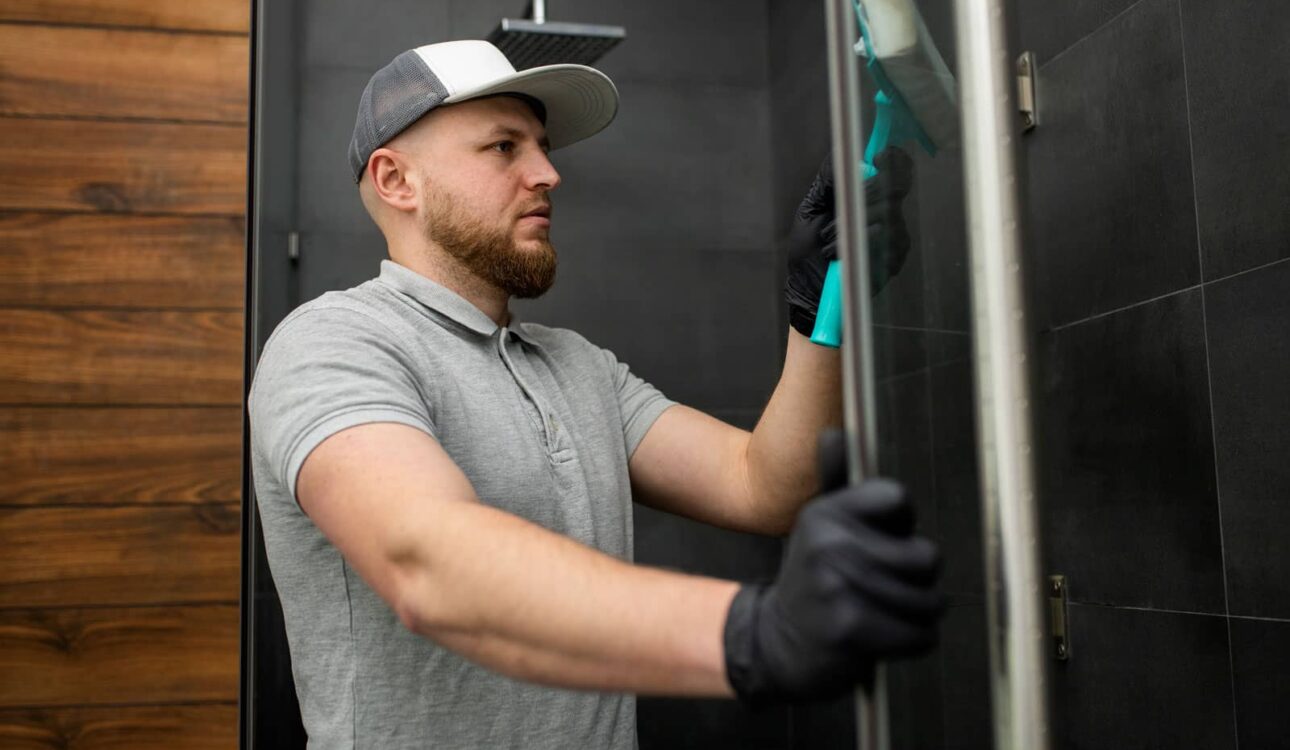
A bathroom is the smallest room in most Orange County homes and, square foot for square foot, the most complicated one to remodel. Water supply, drains, venting, electrical, waterproofing, tile, glass, and cabinetry all have to come together in a space that might be 40 square feet. When one of those layers goes wrong, you usually don’t find out until a stain appears on the ceiling below or the grout starts cracking a year later.
That’s why the conversation you have before you sign matters more than almost anything that happens after. The best bathroom remodeling contractors welcome hard questions. They answer with specifics, put those answers in writing, and never pressure you to sign on the spot. The ones to avoid tend to get vague, change the subject, or quote a price that seems too good to be true.
We’re Q Kitchen & Bath, a family-owned design-build firm with a showroom on Harbor Blvd in Costa Mesa. We’ve sat on both sides of these conversations: answering homeowners’ questions at the kitchen table, and finishing bathrooms that another crew left half-done. The 15 questions below are the ones we’d want our own family to ask. They’re grouped by the part of the project they protect, and each one explains what a good answer sounds like and which warning signs to watch for.
Why Asking the Right Questions Matters When Hiring Bathroom Remodeling Contractors
Most remodeling problems aren’t caused by bad tile or a defective vanity. They come from mismatched expectations: a scope that was never written down, an allowance that didn’t cover the faucet you picked, a schedule nobody committed to, or a payment plan that ran ahead of the work.
Orange County adds its own wrinkles. A 1960s tract home in Costa Mesa or Santa Ana may have galvanized supply lines and cast-iron drains hiding behind the tile. A coastal home in Newport Beach deals with salt air that corrodes cheap hardware and fixtures. A newer Irvine home may sit inside an HOA that wants to approve contractor access, parking, and work hours. And every city runs its own building department, with its own permit process and inspection schedule.
Interviewing two or three bathroom remodeling contractors with the same list of questions gives you a fair way to compare them side by side. It also exposes the gaps in each bid before those gaps turn into change orders.
Licensing, Insurance, and Legal Protection (Questions 1–4)
These first four questions protect you legally and financially. If a contractor can’t answer them clearly, you don’t need to ask the other eleven.
1. Is your CSLB license active, and does the classification fit my project?
In California, contractors are licensed by the Contractors State License Board (CSLB). Since January 1, 2025, a license is required for any job where labor and materials total $1,000 or more, and for any job that needs a building permit or uses workers, regardless of price. A real bathroom remodel crosses all three lines.
Ask for the license number, then verify it yourself with the CSLB’s free Check a License tool. Look for:
- Status: “Active” – not inactive, suspended, or expired
- Classification: A B (General Building) license fits a remodel involving several trades; specialty licenses such as C-36 (Plumbing) or C-54 (Tile) cover only their own trade
- Business name: It should match the name on your contract
- Bond: Every licensed contractor must keep a $25,000 contractor bond on file
- History: Any complaints or disciplinary actions
California also requires licensed contractors to display their license number on contracts, bids, and advertising. If you have to dig for it, make a note.
2. What insurance do you carry, and can I see the certificates?
Two kinds of coverage matter. Workers’ compensation covers injuries to the crew on your property. General liability covers damage to your home, such as a supply line that bursts and floods your hallway. Bathroom remodeling contractors with employees must carry workers’ comp. A contractor who claims an exemption because they have no employees should be able to explain exactly who will be doing the work.
Ask for current certificates of insurance sent directly from the insurance agent, with you listed as the certificate holder, and check that the policy dates cover the whole project. The CSLB license record also shows workers’ comp status, so you can confirm it there.
One important note: the $25,000 bond is not insurance. It’s shared among all claimants and won’t come close to covering a serious water-damage claim.
3. Who will actually be working in my home?
Many bathroom remodeling companies sell the job and then hand it to whichever subcontractors are available that week. Subcontracting isn’t automatically bad – licensed plumbers and electricians are often subs – but you deserve to know who’s coming through your front door.
Ask:
- Which trades do you handle with your own crews, and which do you subcontract?
- Are your subcontractors licensed and insured in their own right?
- Who is the on-site lead, and how often will a supervisor visit the house?
- Will the same tile setter handle my shower from waterproofing to grout?
For bathroom remodeling contractors, crew consistency matters most in the shower. Ideally, the person who installs the waterproofing membrane is the person who sets the tile over it, so no one can blame another trade when something leaks.
4. Will you pull the building permits, and whose name goes on them?
Moving a drain, adding a circuit, relocating a vanity, swapping a tub for a walk-in shower, or upgrading ventilation usually requires a permit. Costa Mesa, Irvine, Newport Beach, Santa Ana, and Huntington Beach each run their own building departments. Experienced bathroom remodeling contractors pull the permit in their company’s name, schedule the inspections, and list permit fees in the contract.
Be cautious if a contractor suggests skipping permits to save time or money, or asks you to pull an owner-builder permit. An owner-builder permit makes you legally responsible for the work and can create problems when you sell, refinance, or file an insurance claim. Permitted work also puts an inspector’s eyes on rough plumbing, electrical, and the shower pan before they disappear behind tile.
Inspectors will also expect new fixtures to meet California’s water-efficiency standards: 1.8 gallons per minute for showerheads, 1.2 for bathroom faucets, and 1.28 gallons per flush for toilets. Ask the contractor to confirm your selections comply before anything is ordered.

Experience and Track Record of Your Bathroom Renovation Contractor (Questions 5–7)
5. How many bathroom remodels like mine have you completed recently?
General experience isn’t the same as relevant experience. Not all bathroom remodeling contractors specialize in bathrooms; a firm that builds room additions all year might do only a handful. Ask how many projects similar to yours – in size, budget, and complexity – the company has finished in the past two years, and ask to see photos of those specific jobs rather than a stock gallery.
Study the details. Look for straight grout lines, tile cuts that land symmetrically at both edges, niches that align with the tile pattern, and clean caulk lines at the tub and glass. Those small finishes tell you the level of care you can expect. You can browse finished projects in our portfolio to see what we mean.
6. Can I speak with two or three recent clients?
Online reviews help, but a five-minute call with a past client is better. Ask the contractor for references from projects completed within the last year, ideally nearby. When you call, ask:
- Did the project finish close to the original schedule and budget?
- How were surprises and change orders handled?
- Was the job site kept clean and safe for the family?
- Would you hire them again?
The last answer usually tells you everything you need. Trustworthy bathroom remodeling contractors hand over references without hesitation, because their past clients are their best sales team.
7. How do you handle what’s behind the walls?
Every experienced bathroom renovation contractor has opened a wall and found something nobody expected: a subfloor rotted by a slow toilet leak, galvanized pipes narrowed by corrosion, a vent fan ducted into the attic instead of outside, or wiring that wouldn’t pass today’s code.
Good bathroom remodeling contractors tell you up front what they commonly find in homes like yours, how they’ll document it (photos before anything is fixed), and how pricing for hidden conditions works. Some include a contingency line in the estimate; others price discoveries through a written change order. Either is fine, as long as you know which one you’re getting.
If your home was built before 1978, ask one more thing: is the firm EPA Lead-Safe Certified? The EPA’s Renovation, Repair and Painting (RRP) Rule requires certified firms and lead-safe work practices when a renovation disturbs painted surfaces in pre-1978 homes. That covers a large share of the housing in older Orange County neighborhoods.
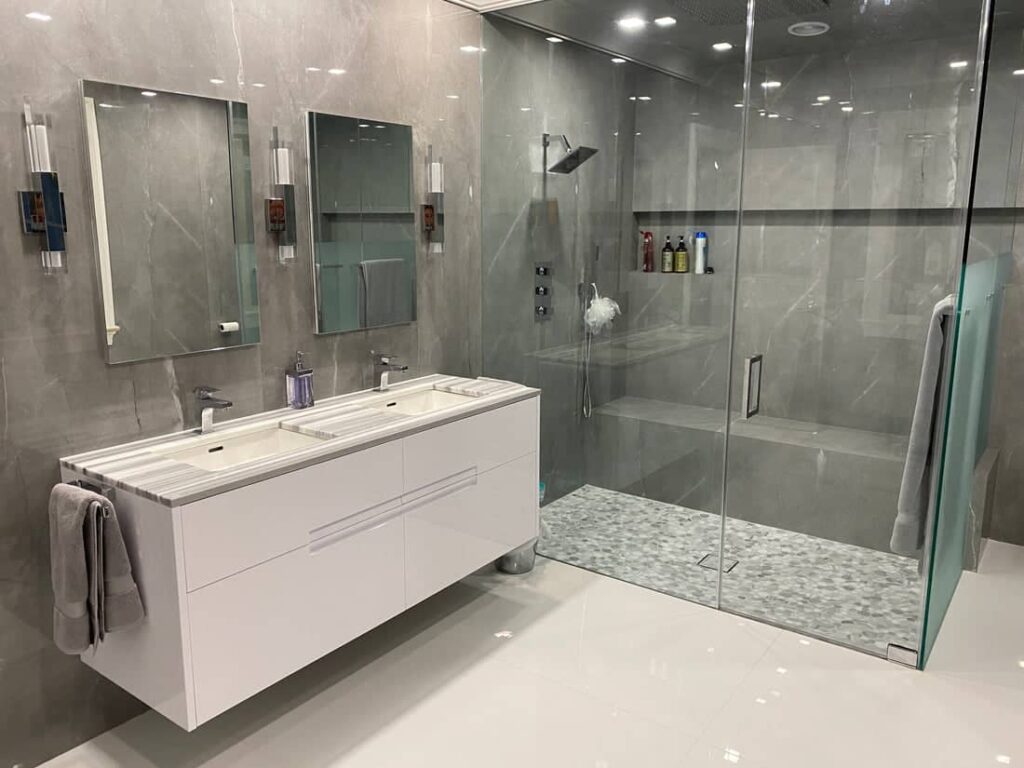
Design, Materials, and Scope of Your Bathroom Remodel (Questions 8–10)
8. Who handles design, and will I see the plan before construction starts?
Some homeowners hire a designer, then a contractor, and spend the project relaying messages between the two. Design-build bathroom remodeling contractors keep design and construction under one contract, so the person drawing the plan answers to the people building it.
Either approach can work, but ask how you’ll see the design before demolition day:
- Will you get a dimensioned floor plan?
- Will you see elevations showing the niche location and tile layout?
- Is there a 3D rendering of the finished room?
- Can you revise it before any materials are ordered?
The cheapest time to change your mind is before the first tile is cut. If you’re still collecting inspiration, our guide to bathroom remodel ideas for Orange County homes is a good place to start.
9. What exactly is included in the estimate, and what isn’t?
Two bids from different bathroom remodeling contractors can look $8,000 apart and be nearly the same price once you line up what each one includes. Ask for an itemized, line-by-line estimate that separates demolition, plumbing, electrical, waterproofing, tile labor, materials, fixtures, glass, paint, permits, and cleanup.
Watch the allowances closely. An allowance is a placeholder budget for something you haven’t chosen yet, such as a set amount for a faucet or a per-square-foot figure for tile. If the allowances are unrealistically low, the bid looks competitive today and grows later. Ask how each allowance was set and what happens when your selection costs more or less.
Also ask which items are excluded. Common surprises include drywall repair in adjoining rooms, haul-away fees, a dedicated circuit for heated floors, and mirror or accessory installation. Storage is another frequent gap; if your bathroom is tight, our post on modern bathroom cabinets for small bathrooms covers options worth pricing in from the start.
10. What shower waterproofing system do you use?
This is the most technical question on the list, and one of the most revealing. Tile and grout aren’t waterproof on their own; the protection comes from what’s underneath. Ask the contractor to name the system they use – a sheet membrane, a liquid-applied membrane, or a traditional mortar bed with a liner – and explain how they treat seams, corners, the niche, the bench, and the valve penetrations.
Then ask whether they flood-test the shower pan before tile goes on. A flood test means plugging the drain, filling the pan with water, and leaving it for at least 24 hours to confirm nothing leaks. The bathroom remodeling contractors who answer this confidently, and offer to send you photos of the membrane before it’s covered, are usually the ones who do careful work everywhere else.
Budget, Payments, and the Home Improvement Contract (Questions 11–13)
11. What is your down payment and payment schedule?
California law caps the down payment on a home improvement contract at $1,000 or 10% of the contract price, whichever is less. After that, payments should match work actually completed and materials actually delivered – never more.
A clear payment schedule ties each payment to a visible milestone:
- Demolition complete
- Rough plumbing and electrical inspected
- Waterproofing installed and flood-tested
- Tile complete
- Final walkthrough and punch list signed off
Avoid paying in cash, and be wary of anyone who asks for a large upfront payment “to order materials.”
Your contract should also explain your right to cancel. California generally gives homeowners three business days to cancel a home improvement contract, and five business days for homeowners 65 and older. The CSLB’s homeowner checklists walk through what a compliant contract should contain.
12. How are change orders priced and approved?
Change orders are a normal part of remodeling. You might decide mid-project you want a second niche, or the crew might find water damage under the floor. The real problem is undocumented changes.
Ask bathroom remodeling contractors to commit to written change orders, signed by both of you before the extra work begins, describing the change, the price, and any effect on the schedule. Verbal “we’ll sort it out later” agreements are how a modest bathroom budget quietly grows by thousands of dollars.
13. Will you provide lien releases as payments are made?
In California, subcontractors and material suppliers who don’t get paid can record a mechanics lien against your property – even if you’ve already paid your contractor in full. Protect yourself by requesting conditional and unconditional lien releases from the contractor, and from major subcontractors and suppliers, as you make each progress payment.
Professional bathroom remodeling contractors use these forms routinely and won’t hesitate. Hesitation is your cue to slow down.
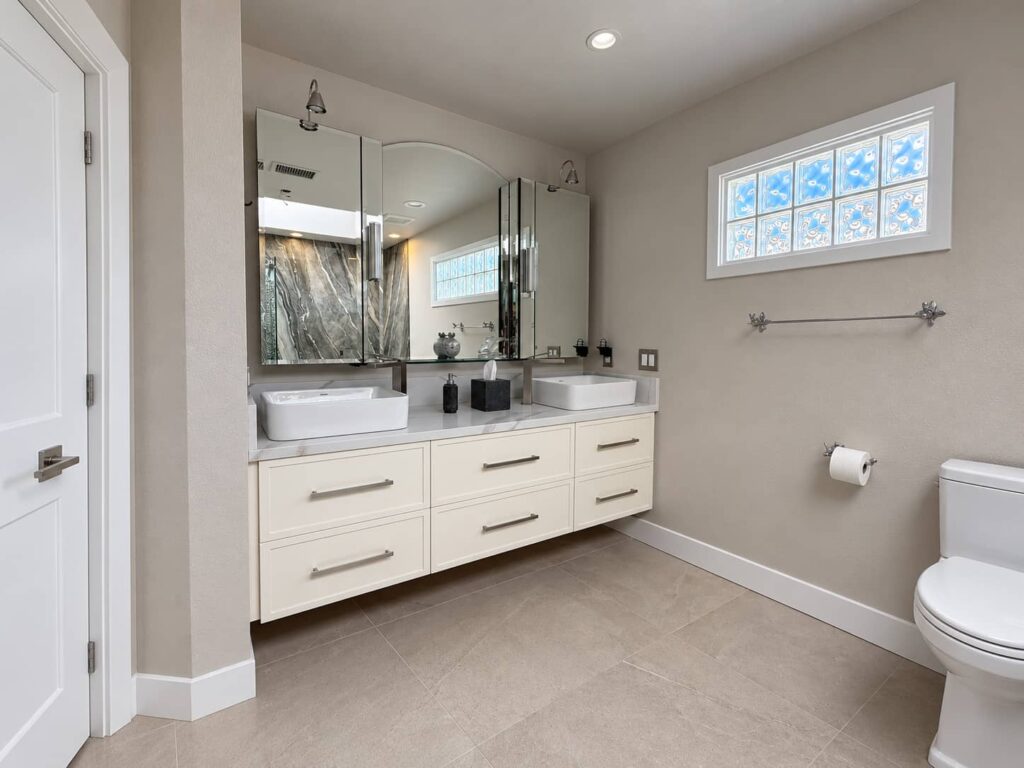
Timeline, Communication, and Warranty (Questions 14–15)
14. What is the realistic timeline, and who is my point of contact?
Ask bathroom remodeling contractors for a written schedule that covers the whole job: design and selections, permit approval, material lead times, construction, inspections, and the final punch list. Custom vanities and shower glass often have the longest lead times, so ask when they’re ordered and whether demolition waits until delivery dates are confirmed. A bathroom sitting gutted for three weeks while you wait on a vanity is a scheduling failure, not bad luck.
Then ask who you’ll talk to day to day. Is there a single project manager or designer? Do they communicate by text, email, or a project app? How quickly do they typically respond? Settling this up front keeps small questions from turning into big frustrations.
15. What does your warranty cover, and for how long?
Get the warranty in writing. It should state how long workmanship is covered, what’s included (waterproofing, tile, plumbing connections), what’s excluded, and how to file a claim. Manufacturer warranties on fixtures, valves, and vanities are separate, so ask the contractor to hand over product documentation and registration information at the end of the job.
Also ask what happens if something goes wrong in year two. Bathroom remodeling contractors with a showroom, a local office, and a long track record in Orange County are far easier to call back than a crew working out of a truck.
Red Flags When Interviewing Bathroom Remodeling Contractors
Even a polished bid can hide problems. Walk away, or at least slow down, if you notice:
- A license number that’s missing, inactive, or registered to a different business name
- Pressure to sign today to “lock in” a discount
- A down payment request above the legal limit, or a request for cash
- No written contract, or one with a single-line scope like “remodel bathroom”
- Suggestions to skip permits or pull them in your name
- No proof of insurance, or certificates that expire mid-project
- A bid far below the others with no clear explanation of the difference
- Vague answers about waterproofing, subcontractors, or hidden conditions
Reputable bathroom remodeling contractors won’t trigger more than one of these, and they’ll have a straightforward explanation if they do.
Your Pre-Signing Checklist for a Bathroom Remodel in Orange County
Before you sign with any of the bathroom remodeling contractors you’ve interviewed, confirm you have:
- Verified the CSLB license, classification, bond, and workers’ comp status
- Received insurance certificates directly from the agent
- Reviewed an itemized scope with realistic allowances
- Seen the design (floor plan, elevations, or 3D) and approved your selections
- Confirmed who pulls permits and that fees are included in the contract
- Agreed on a milestone-based payment schedule within the legal down payment limit
- Received the written right-to-cancel notice
- Agreed on the change order process and lien releases
- Received a written schedule and a named point of contact
- Received the warranty in writing
How Q Kitchen & Bath Answers These Questions
We wrote this list because we’d rather earn your trust with answers than with promises. Here’s how we work on every bathroom remodeling project:
- One design-build contract. Design, architectural engineering, permits, materials, and construction stay with one team. You manage one contract, not five trades.
- Itemized estimates. Materials, fixtures, and labor appear as separate lines, so you can adjust the scope without restarting the quote.
- Design before demolition. You’ll review your layout and tile selections in 3D and can make changes before any materials are ordered.
- Our own crews for the critical work. Waterproofing and tile on our bathroom projects are handled by our own team.
- One point of contact. A single designer stays with your project from the first measurement through installation, and you get a written schedule before demolition day.
- A local showroom. Our Costa Mesa showroom on Harbor Blvd is where you can see materials in person – and where you can find us long after the job is done.
We remodel bathrooms throughout the county, including Costa Mesa, Irvine, Newport Beach, and Santa Ana. If you’re comparing bathroom remodeling contractors in Orange County, bring this list to your consultation with us. We’ll answer every question, and we’ll put the answers in writing.
Frequently Asked Questions About Bathroom Remodeling Contractors in Orange County
How many bathroom remodeling contractors should I interview before hiring?
Three is a practical number. It gives you enough bids to spot an outlier price or a missing scope item without turning the search into a months-long project. Ask every contractor the same questions and request itemized estimates so you can compare them line by line rather than by the bottom number alone.
How do I check if a bathroom contractor is licensed in California?
Use the free Check a License tool on the CSLB website. Search by license number, business name, or personal name, and confirm the license is active, the classification fits your project, the bond is on file, and workers’ compensation status is current. Make sure the business name matches the name on your contract.
How much should I pay upfront for a bathroom remodel in California?
For a home improvement contract, California limits the down payment to $1,000 or 10% of the contract price, whichever is less. After that, each payment should match work completed or materials delivered. A contractor who asks for a large upfront payment, or for cash, is a red flag.
Do I need a permit to remodel a bathroom in Orange County?
Usually, yes. Most bathroom remodels that move plumbing, add or change electrical circuits, alter walls, or change ventilation require a permit from your city’s building department. Purely cosmetic updates, like replacing a vanity in the same location or repainting, may not. A licensed contractor should confirm the requirements with your city and pull the permit in the company’s name.
How long does a bathroom remodel take in Orange County?
A straightforward remodel without layout changes typically takes a few weeks of construction once materials are on site. Moving plumbing, building a custom walk-in shower, or reworking the layout adds time, as do permit review and lead times for custom vanities and glass. Ask your contractor for a written schedule that covers design, permitting, ordering, and construction, not just demolition to finish.
Ready to start with answers instead of guesswork? Visit our showroom at 3135 Harbor Blvd, Suite C, Costa Mesa, CA 92626, call (909) 552-9090, email info@q-kb.com, or book a consultation online. Bring your questions – all 15 of them.